
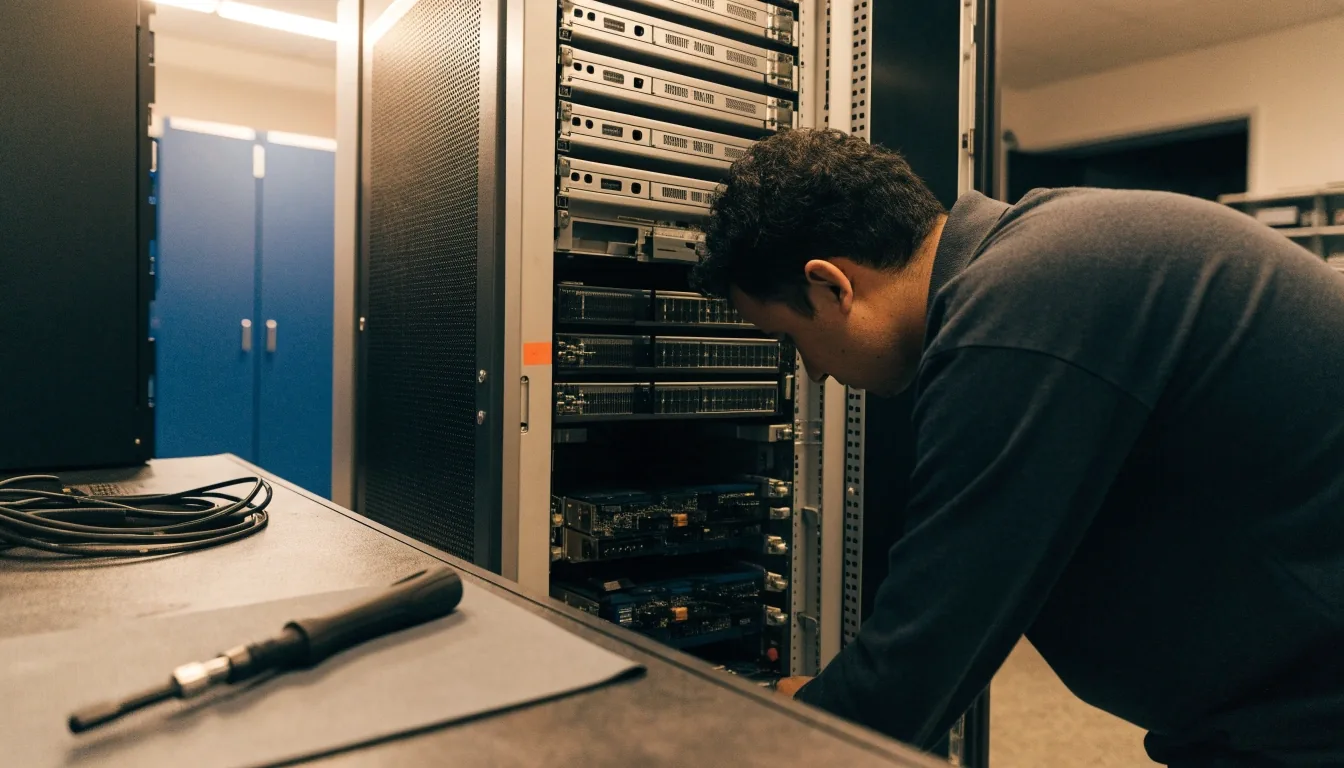
IT services for Hungarian organisations
Managed services, cloud, security, and software
Four service lines, one team. Most clients start with one of them and add others as their environment changes.
Managed services
Service desk, endpoint management, patching, backup checks and monitoring.
Scope and response agreed in writing
Cloud consulting
Microsoft 365, Azure and hybrid setups: design, migration, operation.
Hybrid planned for, not treated as temporary
Security and software
Identity hardening, email and endpoint protection, plus internal tools built to last.
Basics first, before something goes wrong
Where to start
Pick the line that matches your situation
Below is what each service line actually covers, who tends to need it, and where the boundaries sit. If you already know what is breaking, the service desk section is the fastest route to a conversation. If you are planning a move to Microsoft 365 or Azure, read the cloud and security sections together — the order matters more than the tooling.
Typical starting points
- A manufacturer with two shifts and no internal IT Managed services
- A firm moving file shares and mailboxes off local servers Cloud consulting
- A team replacing spreadsheets nobody can maintain Custom software
- A company preparing to move workloads to the cloud Cybersecurity
Managed services
This is the ongoing relationship: a service desk for your users, endpoint management for laptops and desktops, patching, backup verification, and monitoring. We take over the day-to-day administration of Microsoft 365 tenants, handle user onboarding and offboarding, and keep an eye on the infrastructure that production depends on.
A Győr manufacturer with two shifts and no internal IT is a typical fit. So is a professional services firm with thirty staff and one overloaded office manager doing IT on the side. Response times and scope are agreed in writing, so both sides know what a normal week looks like and what counts as an exception.
Takeover work follows the same order every time: inventory of what exists, credentials and access review, documentation of the current state, then the move to our monitoring and service desk. Nothing is changed silently — you approve the handover plan before anything switches.
What a managed engagement covers
Service desk
How tickets flow
Tickets arrive by phone, email, or through a portal, depending on what suits your team. We triage, resolve what we can remotely, and escalate what needs a site visit.
For clients who want more structure than email, we run service management workflows with incident tracking, change handling, and request management, similar to what Jira Service Management provides. The point is traceability: you can see what was reported, what was done, and how long it took. That matters when an audit or an internal review asks questions.
Reported
Whatever channel the request came in through, it lands in one queue with an owner and a timestamp.
Worked
Remote first. If the fix needs hands on the machine in Győr, the visit is scheduled and logged against the same ticket.
Reviewed
The history stays available, so a manager can check a month of requests without asking us to reconstruct it.
Cloud consulting
Microsoft 365, Azure, and hybrid environments
We design the setup, plan the migration, execute it, and then operate it. Common projects include moving file shares off local servers, migrating mailboxes, setting up Azure virtual machines for applications that need them, and connecting on-premise systems to cloud services without breaking authentication.
Hungarian companies often end up in a hybrid pattern for years, with some workloads in Győr and others in Azure. We plan for that reality rather than pretending it is temporary. That means naming conventions, identity, network routes and backup policy that still make sense when half the estate lives in one place and half in the other.
Migrations are scheduled around your business hours, with a rollback position documented before each phase starts. Nobody discovers on a Monday morning that the old file share was switched off on Friday.
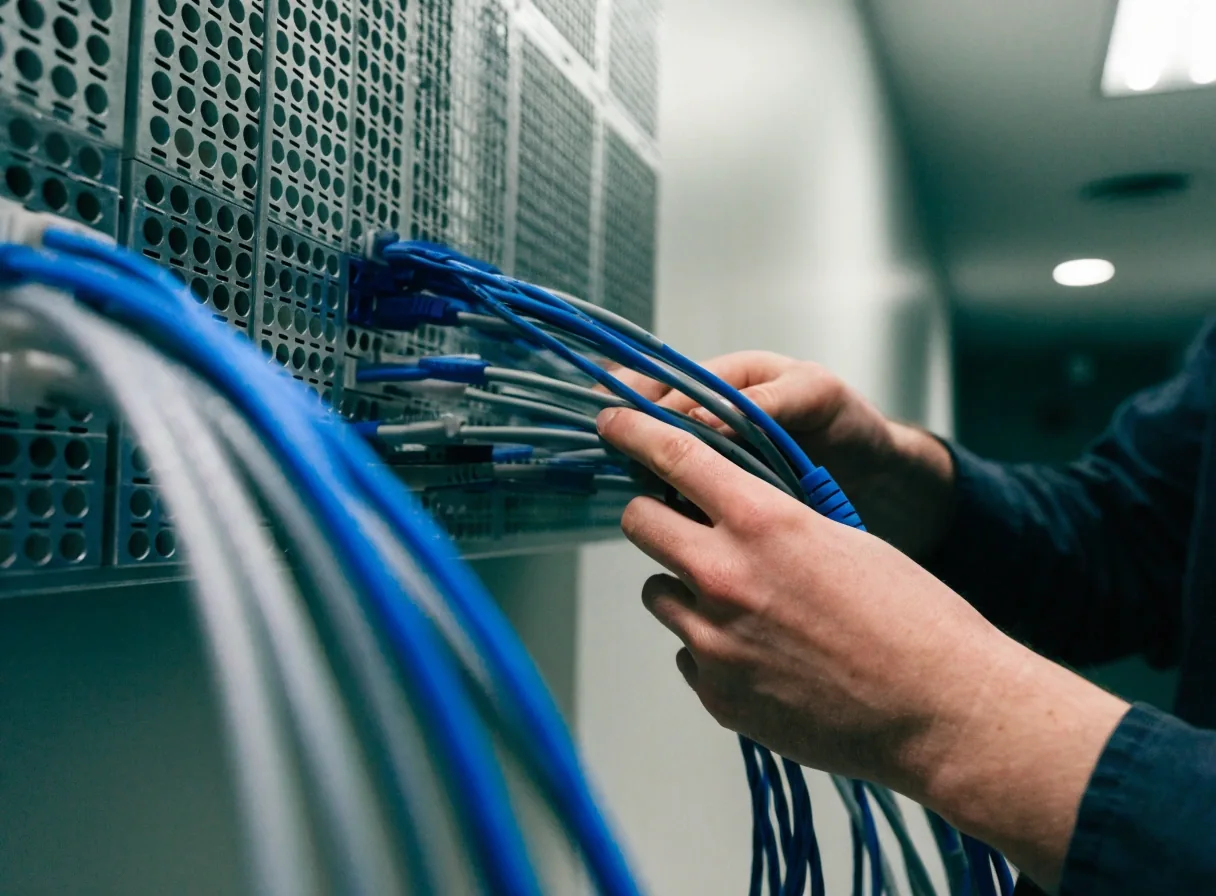
On-premise and cloud joined without breaking sign-in
Cybersecurity
The unglamorous work that prevents incidents
Access reviews, multi-factor authentication, identity hardening, email protection, and endpoint security. We are not a security operations centre and we do not claim to be one.
What we do is make sure the basics are in place before something goes wrong: accounts that should be disabled are disabled, admin rights are limited, backups are tested, and phishing is filtered. For companies preparing to move workloads to the cloud, this work usually happens first.
What the first pass checks
Accounts
Dormant and former-staff accounts reviewed and closed, shared logins replaced with named ones.
Sign-in
Multi-factor authentication rolled out with a plan for the people who will resist it.
Rights
Admin rights narrowed to the few roles that need them, with a documented approval route.
Recovery
A backup restore actually run and timed, not just a green tick on a dashboard.
Custom software
Internal tools and integrations
Internal tools, integrations, and applications that do not exist off the shelf. Examples from our work include reporting tools that pull from an ERP and a shop-floor system, workflow applications that replace spreadsheets a team has outgrown, and middleware that lets two business systems share data.
We build small and maintainable. A three-person internal tool that works for eight years beats a large platform that nobody can maintain after the original developer leaves. That preference shows up in the choices we make early: fewer moving parts, standard components, and documentation the next person can actually follow.
Reporting
Numbers pulled from the systems you already run, on a schedule a manager can rely on.
Workflow
A form, a queue and a status trail that replace the spreadsheet the team has outgrown.
Integration
Middleware so two business systems share data instead of being reconciled by hand.
Combined engagements
When to combine service lines
Most realistic environments need more than one line. We scope combined engagements as one plan with clear phases, so you are not coordinating three vendors who never speak to each other.
Moving to Microsoft 365
Cloud work and security work at the same time, because identity and access decisions made during migration are hard to undo later.
Replacing ageing servers
Managed services to run the new environment plus custom integration to connect it to production systems.
Outgrowing a spreadsheet
A workflow tool built first, then the reporting and access rules that keep it trustworthy as more people use it.
Scope
What is not in scope
Being clear about the boundaries is more useful than pretending we do everything. If something falls outside the list below, we will say so early rather than discover it mid-project.
Starting an engagement
How engagements start
Every engagement begins with an assessment. We look at what you run, what breaks, what worries you, and what you are planning. Then we propose a scope with a price and a timeline.
Small service desk takeovers can be running within two weeks. Cloud migrations and custom software projects get their own schedule. You get a named contact and a clear escalation path from day one.
The four steps, every time
- Assessment A walk-through of your systems, your tickets, and your plans for the next year or two.
- Written scope What is included, what is excluded, the response expectations, and the price. No verbal-only agreements.
- Handover Credentials, documentation and monitoring moved across on a schedule you approve.
- Steady state A named contact, an escalation path, and a review rhythm so the scope stays honest as you grow.
Questions we get
Before you get in touch
Can we take just one service line? Open
Yes. Plenty of clients start with a single line — most often the service desk or a cloud migration — and stay there for a while. There is no minimum bundle, and adding a second line later is a normal conversation rather than a renegotiation.
Do you work outside Győr? Open
Remote work covers most of what we do, so clients elsewhere in Hungary are common. Site visits are planned around where the equipment actually sits, and travel is discussed as part of the scope rather than left as a surprise line on an invoice.
Can you take over from our current provider? Open
That is one of the most common starting points. The assessment phase is designed for it: we document what exists, agree a handover window with your outgoing provider where that is possible, and avoid changing anything until the plan is signed off.
What do you need from us to quote? Open
A rough headcount, the systems you depend on, where they run today, and what is causing the most friction. You do not need a formal specification to start — part of the assessment is working out what the specification should say.
Not sure which line fits?
Describe what is breaking or what you are planning. We will tell you which of the four service lines applies, what an assessment would cover, and where the boundaries sit — including the cases where the honest answer is that you do not need us yet.