
Industries we serve · Győr and western Hungary
IT services shaped around your sector
The technology is similar across sectors. The constraints are not. A factory cannot stop a production line for a Windows upgrade, a retail chain cannot lose a POS terminal on a Saturday, and a law office cannot send client documents through an unsanctioned file-sharing service. Below is how we adjust our work for the sectors we know best.
Manufacturing and production
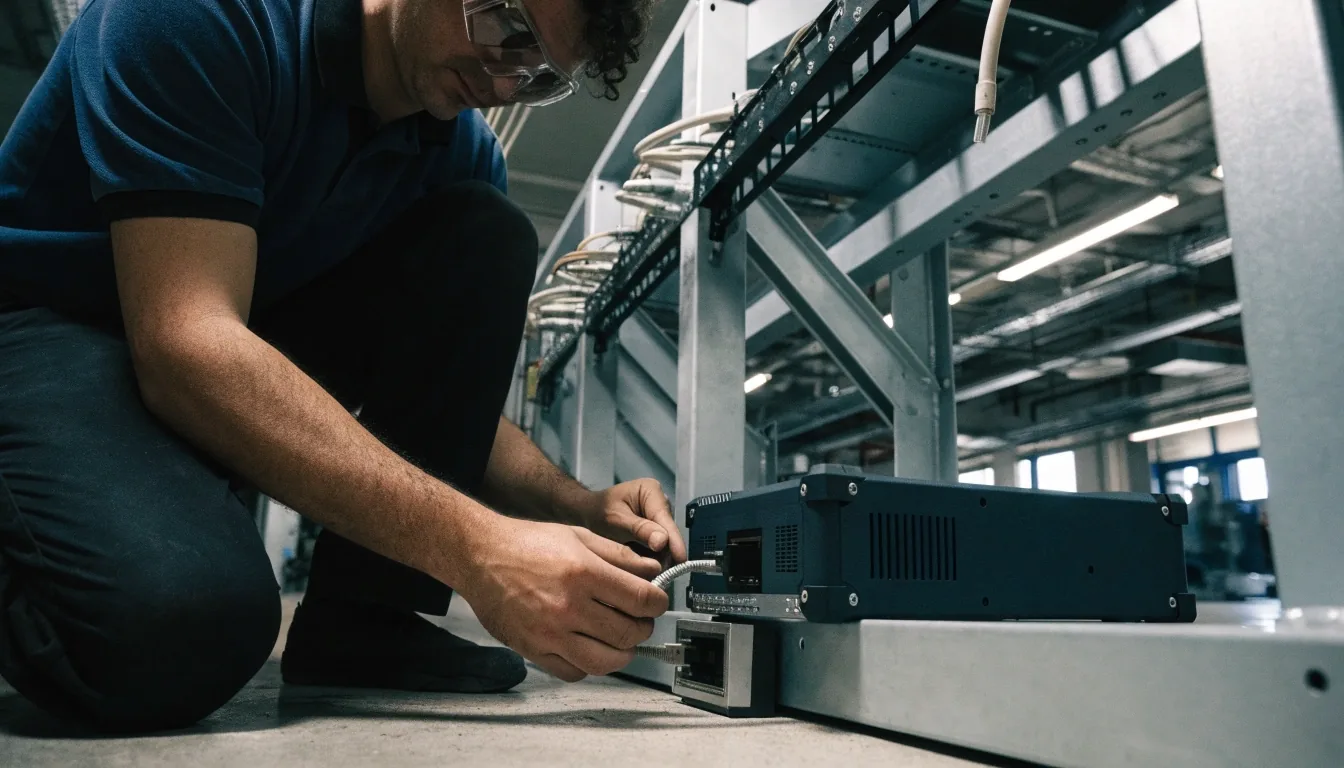
ERP systems, shop-floor terminals and office IT kept running through shift patterns.
Retail and hospitality
POS infrastructure, store-to-store connectivity and back-office reporting.
Professional services
Confidentiality and document availability for law, accounting and consultancy.
What changes between sectors, and what does not
Identity, backup, patching and monitoring matter everywhere, and the security fundamentals are the same whether you make machine parts or handle legal files. Maintenance windows, hardware constraints, compliance obligations and the cost of downtime are what move. Our scoping process starts with those four variables.
That is why two clients with similar staff counts can end up with very different agreements, and why we do not sell a standard package. Two sites in the same town, both with forty people, can carry completely different hardware lifecycles, different audit obligations and different tolerance for a Tuesday morning outage.
Before we quote anything, we ask what happens to your business if a system is down for an hour, what a regulator or a client contract requires you to keep, and when it is actually acceptable to touch a running machine. The answers set the shape of the agreement, not a price list.
Four variables drive scoping
Manufacturing and production
Downtime is the real budget line
Retail counter after close · POS and back-office link
Retail and hospitality
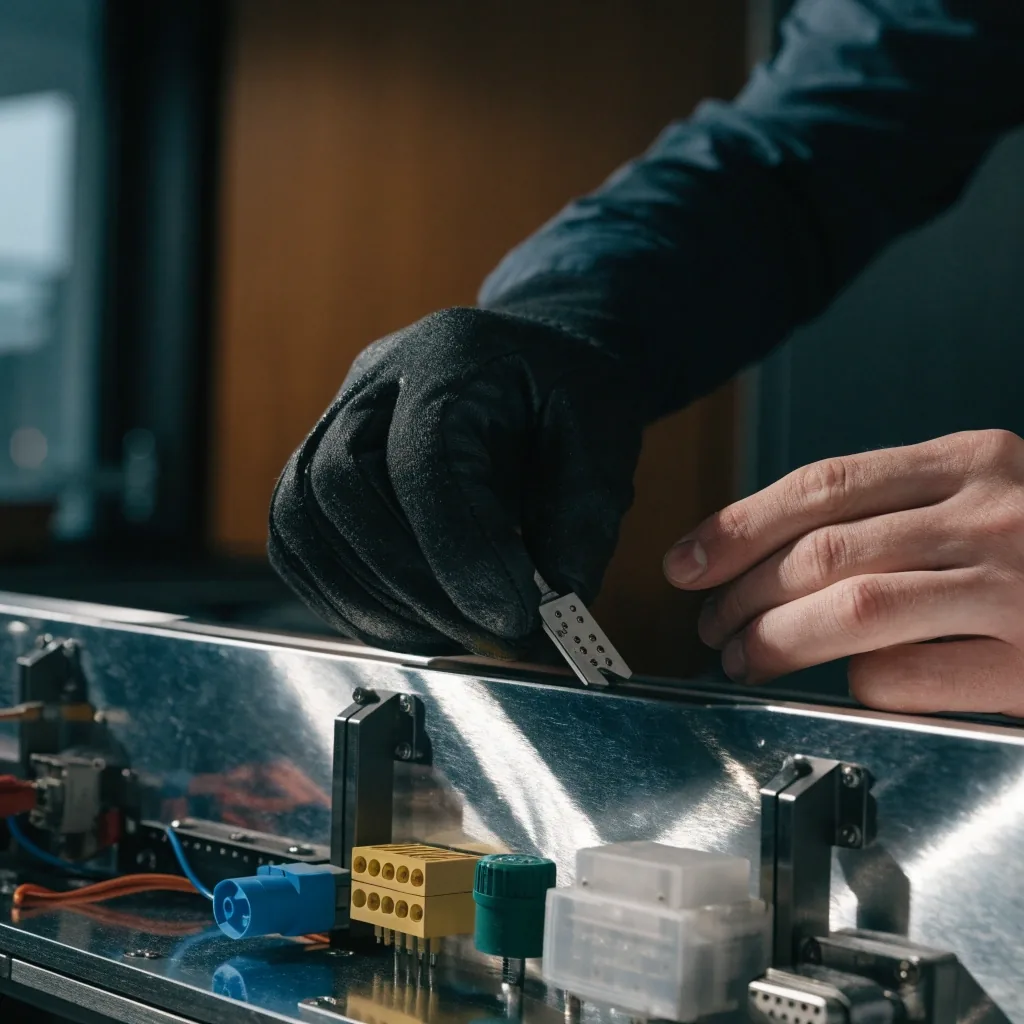
Retail environments are distributed by nature: multiple sites, limited on-site technical staff, and systems that must work during trading hours. We manage POS infrastructure, network connectivity between stores, and the back-office systems that handle inventory and reporting.
Support is scheduled around opening hours, and remote tools handle most issues without a site visit. When a card reader or a till goes quiet at ten past nine on a Saturday, the person behind the counter needs a fast answer, not a ticket queue that starts on Monday morning. We keep a route open for exactly those calls.
For chains expanding across western Hungary, we plan network and endpoint rollouts store by store so a new location opens with everything configured and tested. That includes the cabling, the access point placement, the till image and the backup path, checked before the doors open rather than in the first busy week.
Professional services
Law firms, accounting practices, consultancies and similar offices have two priorities: confidentiality and document availability. We set up Microsoft 365 environments with appropriate access controls, manage identity carefully, and configure email and file sharing so client data does not leak through personal accounts.
Backup and retention policies are set to match professional obligations rather than a generic default. For firms with compliance requirements, we keep documentation of what is configured and why, which makes audits considerably less painful. The document trail is part of the deliverable, not an afterthought.
Identity and access
Separate accounts per person, multi-factor sign-in, and a written rule for who may share what with whom.
Scope
Per firm, per obligation
Document availability
Client files reachable from the office and from approved remote locations, with retention set to the practice's own rules.
Audit trail
Configuration documented
Public institutions and cultural organisations
Institutions run on tighter budgets and longer procurement cycles than private companies. We work with them on multi-year planning: what gets replaced this year, what can wait, and how to phase a migration so it does not collide with a funding deadline.
A replacement plan written across three years is easier to defend than a single large request, and it gives the finance office something to budget against. We keep the plan in plain language, with the reasoning attached, so a new colleague can pick it up.
Cultural venues and museums have their own pattern, often needing digital content delivery alongside conventional IT support. Platforms like cloud-based guide systems show how specialised these requirements can get, and we plan infrastructure around them rather than against them. That means the network, the wireless coverage and the guest access rules are designed with the exhibition space in mind.
Logistics and transport
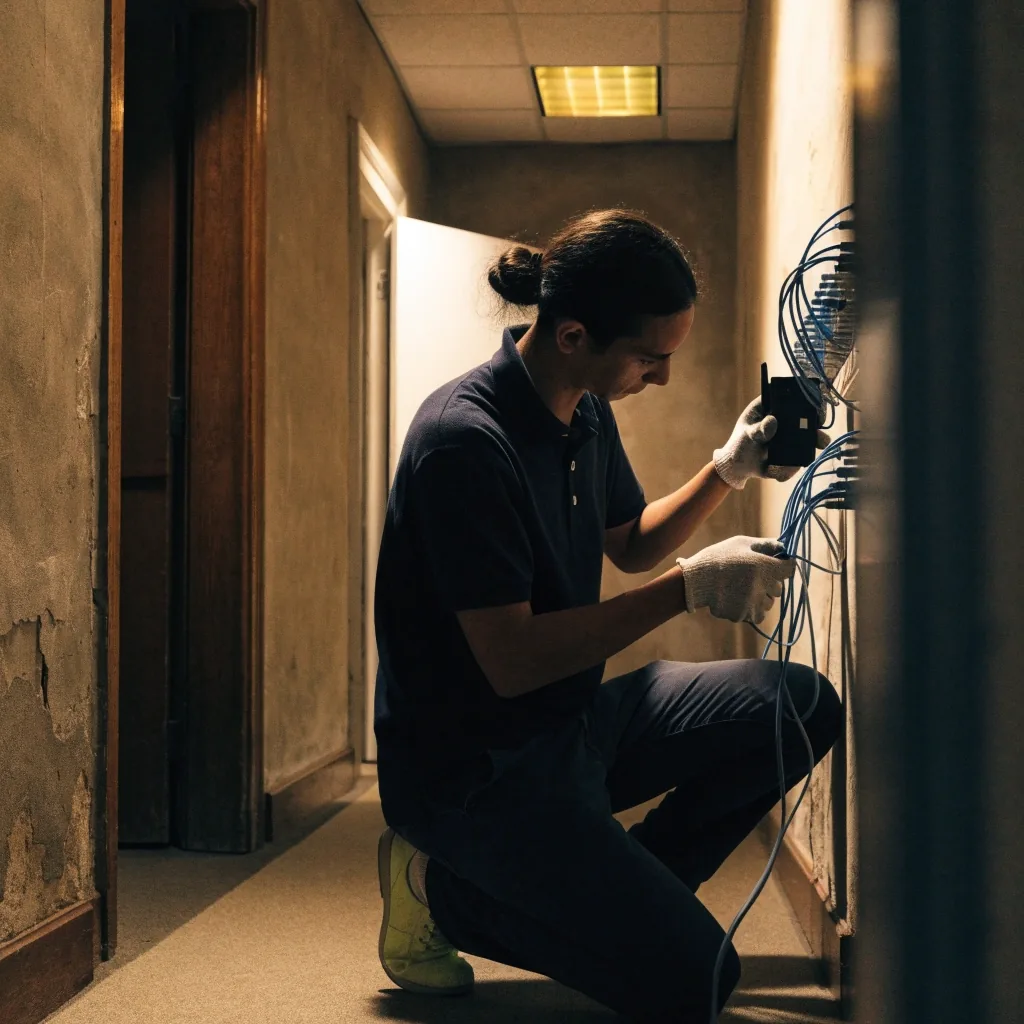
Logistics companies live on connectivity and tracking systems. A warehouse management system that drops offline mid-shift is a serious problem, and drivers or dispatch staff cannot wait for a ticket queue. We prioritise network reliability, monitoring that catches problems early, and mobile device management for handheld terminals and vehicle-mounted equipment.
Where a client operates across multiple sites, we standardise the configuration so support does not depend on which building you are standing in. A handheld scanner in one warehouse behaves like the one in the next, and a replacement unit can be prepared before the broken one leaves the loading dock.
Monitoring before the shift starts
Small businesses without an IT department
One agreement, one contact
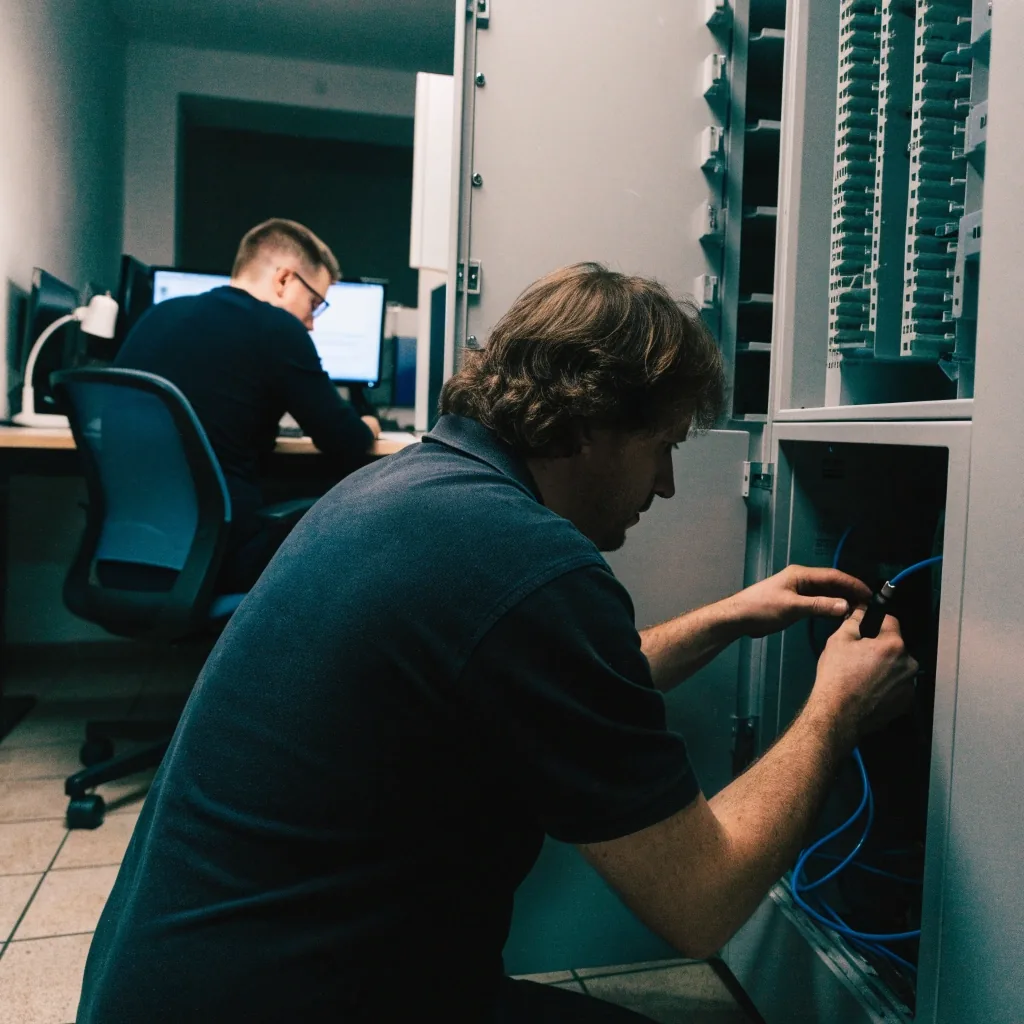
A large share of Hungarian SMEs have no dedicated IT staff. Someone with an interest in computers handles it alongside their real job, and that arrangement works until it does not. For these clients we provide the full operational layer: service desk, endpoint management, Microsoft 365 administration and security basics.
The relationship is deliberately simple. One agreement, one contact, one invoice, and a clear answer when something breaks. The person who used to fix the printer at lunchtime gets their lunchtime back, and the business gets a written record of what is installed, what is licensed and what is backed up.
Working across multiple sites
Distributed operations add a layer of complexity that single-site companies never encounter. Network configuration has to be consistent, user accounts have to work everywhere, and support has to know which site is which. We document every location, standardise hardware where possible, and set up remote management so a technician does not need to drive to Szombathely for a password reset.
When a new site opens, the rollout follows the same template as the last one. The cabling schedule, the access point positions, the firewall rules and the device naming are all repeatable, which shortens the second opening and shortens the third one again.
Documented locations
Every site gets a written record of its network, hardware and contacts, kept current as things change.
Site record
One per location
Standardised hardware
Where the work allows, the same switch, access point and terminal model appears at every site, so spares travel.
Spare pool
Shared across sites
Remote management
Most issues are handled without a drive, and the trip is saved for what genuinely needs hands on site.
On-site visits
Only when needed
Questions we get asked
Short answers to what usually comes up when a business compares IT support for its own sector.
Do you only work with certain sectors?
No. The sectors on this page are the ones we know best and can plan for quickly, because we have seen their maintenance windows and hardware constraints up close. Other businesses are welcome, and the scoping conversation simply takes a little longer while we learn the operational pattern.
Can we keep our existing ERP or industry software?
In most cases, yes. Changing a working ERP is a business decision, not an IT one, and we are usually brought in to make the existing system run reliably and connect properly to reporting, dashboards and backups. Where an integration is awkward, we work around it rather than forcing a replacement.
How is support scheduled around trading or shift hours?
Support windows are agreed per site, not assumed. For retail that usually means coverage through opening hours with planned work outside them; for production it means maintenance windows that fit the shift pattern so a line is not stopped for a routine task. Both are written into the agreement before anything is scheduled.
What does an assessment involve?
We walk the sites, look at what is installed and licensed, check how identity and backup are handled, and talk to the people who actually use the systems. The output is a written picture of the current state, the risks worth acting on, and a phased plan with the reasoning attached, so it can be discussed internally before any decision is made.
Tell us how your sector actually runs
A short conversation about your maintenance windows, hardware constraints, compliance obligations and the real cost of downtime is enough for us to say what applies and what does not. If a standard package would not fit, we will say so and explain what we would do instead.
ALPHATECH Számítástechnikai Korlátolt Felelősségű Társaság is based in Győr and works with businesses and institutions across western Hungary. Company registration number 13-06-045892, tax number 25984561-2-08.
Where to find us